In the motor industry, precision parts machining is deeply integrated into the wave of new energy vehicles (NEVs). The core trends are: higher precision requirements, entirely new types of parts, and a heavy reliance on a fully integrated process chain.
Here are a few key aspects of precision parts machining in the motor industry.
Key Precision Parts and Challenges
The focus areas for machining different parts vary a lot:
1 Motor Housing:
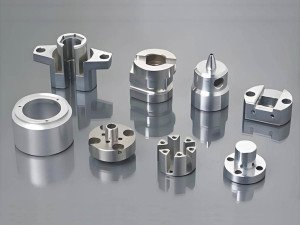
This is the most typical precision component. To ensure the efficiency of the motor, its form and position tolerances are extremely strict. The challenge lies in
- Thin walls are easy to deform: because the casing usually has thin walls to integrate cooling channels, it demands very high control over clamping methods and cutting forces.
- Complex process: stator hole machining is often divided into three steps: rough machining, semi-precision machining, and precision machining to ensure micrometer-level accuracy.
- Material differences: When machining an aluminum alloy housing, if a steel bearing sleeve is pressed in, special tools are needed to protect it and prevent steel shavings from scratching the aluminum surface.
2 Rotor Shaft:
As the core component that spins at high speed, it has strict requirements for dynamic balance, coaxiality, and surface finish. The typical process chain includes turning, laser welding, hard turning, grinding, and other steps, usually integrated through automated production lines.
3 Stator Components:
Hairpin coils: During manufacturing, it’s important to strictly control the consistency of the bent dimensions. In inspection, multiple methods like microscopes, coordinate measuring machines, and CT scans are often used to make sure the insulation layer isn’t damaged and the welds don’t have any holes.
Stator core: Made by stamping and stacking high-precision silicon steel sheets, with very high requirements for material flatness and dimensional consistency.
Core Processing Technologies and Trends
To tackle these challenges, the industry has adopted a range of advanced machining technologies.
1 Accuracy requirements have jumped:
The precision of parts in traditional fuel cars is usually around 0.01-0.05 mm, while for key motor components, it’s already up to the micrometer (μm) level. For example, the critical dimensions of a motor housing can be controlled within 0.0-0.06 mm. This puts extremely high demands on the thermal stability of machine tool accuracy.
2 Integrated machining and the spread of five-axis:
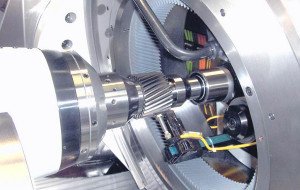
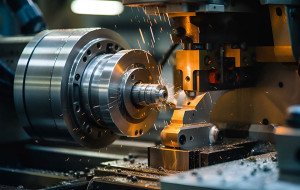
It’s become common to combine multiple processes like turning, milling, drilling, and gear machining in a single setup. Because of this, five-axis machining centers have quickly become popular for efficiently and accurately working on complex surfaces and hole patterns.
3 Full-process quality monitoring:
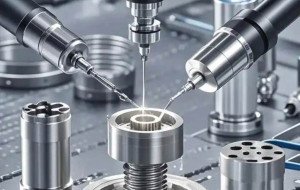
Extensive integration of online measurement systems during the manufacturing process to monitor and compensate for size deviations in real time, ensuring batch consistency. Measurement solution providers like Zeiss offer optical, tactile, and microscopic comprehensive inspection solutions that cover the entire process from raw materials to finished products.
4 Specialization of materials and tools:
Aluminum alloy has become the main material for casings, which requires tools to have sharp cutting edges and optimized chip removal design. PCD (polycrystalline diamond) tools are often used for fine machining of aluminum alloys because of their high hardness and wear resistance. When machining steel parts, however, you need to switch to carbide tools.
To sum up, the precision parts machining for the motor industry requires exact precision machining procedures and strict quality inspection systems to ensure the final products to be made to reach the customers’ requirements.